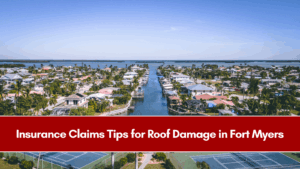
Living in Fort Myers means enjoying beautiful coastal weather—but it also means dealing with frequent tropical storms, strong winds, flying debris, and hurricane seasons that can severely damage residential roofs. When your home’s roof is compromised, the situation can feel stressful, especially if you’ve never filed a roof insurance claim before.
At Andrews Roofing, we’ve helped thousands of Florida homeowners navigate the insurance claim process for roofing damage. With our extensive experience, certifications, and commitment to customer support, we’ve seen firsthand how the right approach can make the difference between a smooth claim and a denied or underfunded one.
Below are our most valuable tips for filing roof damage insurance claims in Fort Myers—so you can protect your home and make sure you receive the compensation your policy entitles you to.
Timing matters. Once your roof is damaged, water intrusion, mold, and additional structural harm can occur rapidly. Insurance companies also expect homeowners to take reasonable steps to prevent further damage.
As soon as the storm passes:
Take photos and videos of visible damage
Look for missing shingles, cracked tiles, lifted flashing, and debris
Check for leaks or water stains inside the home
Contact Andrews Roofing for a professional inspection
Acting quickly helps strengthen your claim and provides a clear timeline of the damage. If temporary measures like tarping are needed, we’ll guide you on the best next steps to secure your home while the claim is being processed.
Tip 2: Get a Professional Inspection Before Filing
Many homeowners make the mistake of filing the insurance claim first, only to have the adjuster deny major damage that wasn’t properly documented.
Having Andrews Roofing inspect your roof before filing gives you:
Accurate professional evidence
A complete understanding of the damage
Clear photos and measurements
A stronger claim from day one
Insurance adjusters are trained to evaluate damage—but they aren’t roofing contractors. A professional roofer can identify structural issues the adjuster may miss and can provide technical support to validate your case.
Once the insurance company sends their estimate, don’t assume everything is correct. Review it carefully and look for:
Missing line items
Underpriced materials
Excluded damage
Unrealistic installation labor allowances
Andrews Roofing regularly helps homeowners identify discrepancies and request supplements—official submissions that ask the insurer to adjust the estimate based on documented evidence. Many homeowners receive thousands of dollars in additional coverage simply by following this step.
Once a claim is approved, schedule repairs promptly. Florida weather can change quickly, and waiting too long can leave your home exposed to new storm damage. Insurance carriers may also question claims if conditions get worse due to delays.
With Andrews Roofing, projects are scheduled efficiently, and our crews work cleanly, safely, and professionally to restore your home as quickly as possible.